

13th September, 2026
Exploring Alaska
Alaska, Part Two
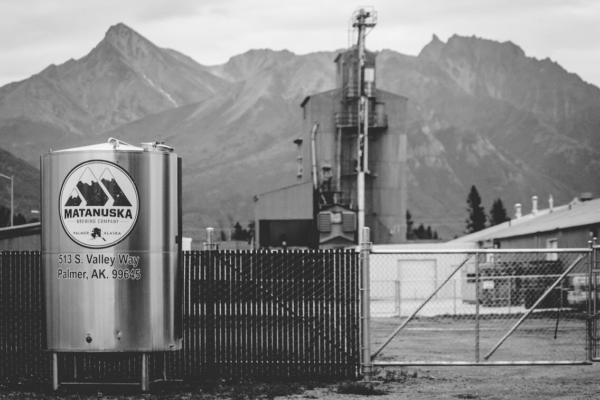
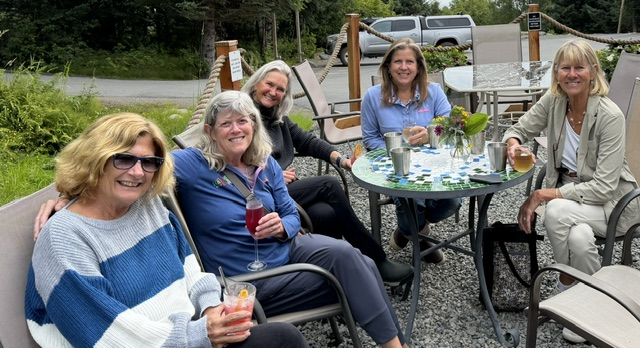
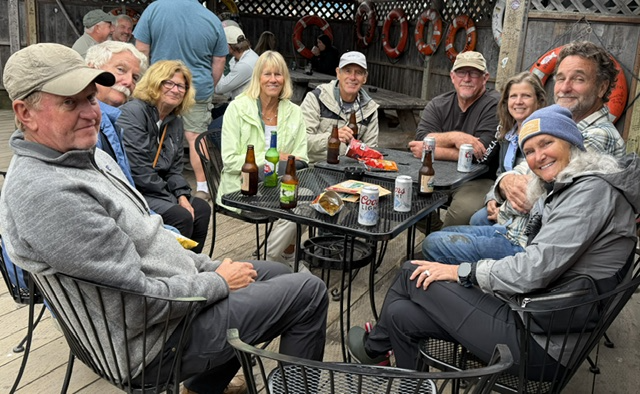
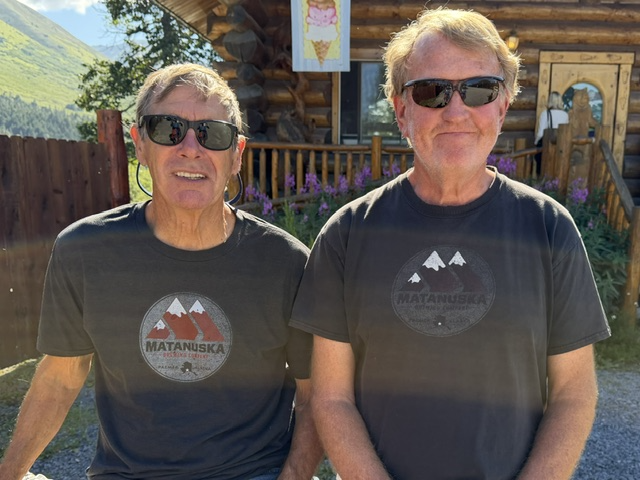
We always enjoy checking out local breweries in the areas we travel and our hosts were happy to oblige. Russ and Rhonda just happen to own one; Matanuska Brewery and Tap Room in their hometown of Palmer, Alaska. After a tour from Russ, the six of us sat down outside to enjoy a meal and a cold beer. With a large selection of beers, each of us tried something different. Jay was looking for something unique, something he hadn’t tried before. He opted for the Pineapple Express Ale and he wasn’t disappointed. In fact, that was his choice drink for the rest of our stay. We each chose a different entree, and all was delicious, but I must say, the winner was the Brussels Sprouts. They were deep fried and covered with house-made hollandaise sauce and poached eggs. Wow! So, so good.
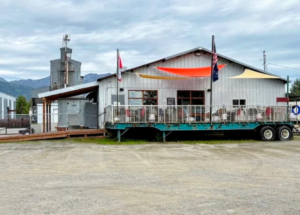
Matanuska Brewery
Palmer is a small town that lies near the Matanuska River in the Matanuska Valley, surrounded by the Talkeetna and Chugach Mountains. It is about 45 miles northeast of Anchorage. Russ & Rhonda live in a quiet neighborhood downtown within walking distance of the brewery and the house where we were staying.
Rhonda had planned a very detailed itinerary for us with options depending on weather and next up was a trip down the Kenai Peninsula to Homer.
It was difficult to follow that first day in Alaska, flying over the glaciers and hiking into Lake George. Although the scenery along the Kenai Peninsula, with its lakes, rivers and fjords, was stunning. And the mountains were just as spectacular, maybe more so from the ground looking up. Our first stop was Whittier, a town hidden behind and deep within the Chugach Mountains. I was interested in its history and curious due to the fact that almost all of its 270 residents live in one apartment building.
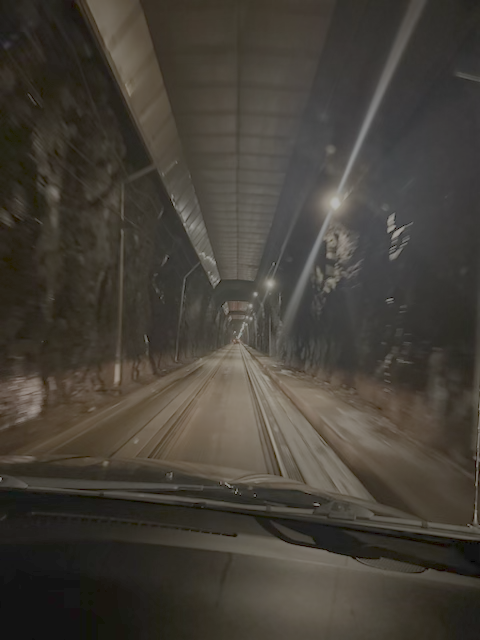
The only way to get there is by water or by a one-way tunnel that is for both cars and train. We arrived in plenty of time to catch the 12:30 opening to enter the town. Or so we thought. But first there was a train. And then there was a problem with the tracks. Finally, they let us through at 1:30.
It was a long tunnel, about two and a half miles. Eerie. Dark. Our car bumping along the train tracks. A hint of wet rock drifting in the air. When we pulled out of the tunnel and into the bright sunshine, we were greeted with an industrial seaport nestled between three sides of mountains and a deep waterway, leading to Prince William Sound. Railroad tracks ran through the middle of town with a walking tunnel beneath it to cross from one side of town to the other. A couple of run-down buildings housed the seafood processing plants. The one apartment building stood tall against the mountain. There were a few trinket shops and a few eateries along the dock.
“Why would anyone want to live here?” were the first words out of my mouth. It is so remote. I would think lonely, isolating, boring even. Not to mention the brutal winters…I was dumbfounded. “How did this town come to be?” I wondered aloud.
-
- Tunnel To Whittier
-
- Apt. Building Whittier.
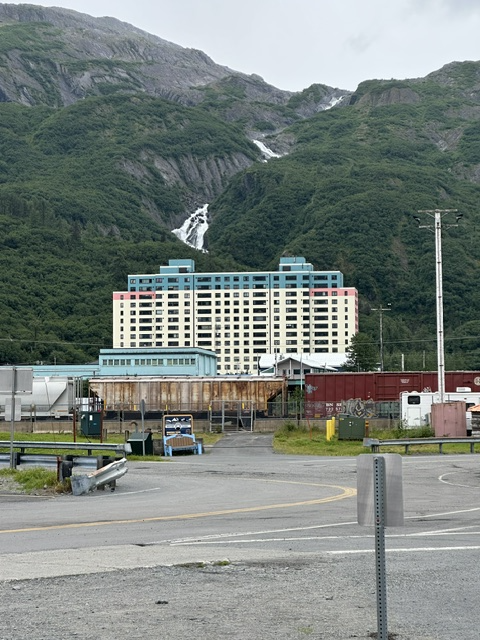
I learned that it was built to be a military base during World War II. Its secluded location perfect for keeping it a secret. The apartment building was originally a barracks. Due to the limited area, as well as the severe winters, there hasn’t been much incentive to build individual housing. Now Whittier is the closest deep-water port to Anchorage and is a pick-up point for Alaskan cruises. There is great fishing in the area. And great hiking. Still, to live there? There has to be so many obstacles to overcome just to exist. What about their medical needs? What if there is an emergency in the middle of the night? The tunnel closes after 11:00 pm. We live on an island so I am familiar with the challenges that can arise. But this? No thank you.
The air was crisp and cool as we walked around town. Whittier is known for their fish and chips and so we found a place to order our lunch. It was busy with tourists who were there waiting for their cruise ship to arrive. Sitting on the dock, eating halibut and fries (good as promised), I was lost in my thoughts as I stared at the mountains towering all around us, and watched as a lone boat motored out to sea. So beautiful, and yet so desolate.
As we drove south, Russ told us the story about the body of water that we saw running along the west coast of the peninsula, Cook Inlet. On the northern border of the peninsula are two narrow fjords. When Captain Cook was in search of the Northwest Passage, he ran into these two “dead-end” fjords and had to keep turning around. The two areas are now called Turnagain Arm and Knik Arm (after the glacier).
We also learned about the tidal bore and how extreme and dangerous they can be. In some areas, when the tide ebbs, it reveals mud flats that are tempting to walk on. However, it is deceiving because the ground is soft and can act like quicksand. When the tide flows, it is quick and has been known to catch tourists unaware and they get stuck. Often to their peril.
Several hours later we arrived in Homer, one of the premier fishing destinations in the state of Alaska. There we met up with more of our Mexican sailing buddies, Ron and Jo from sv/Peregrine. When they heard we were coming to Homer, they invited us for dinner. Their condo overlooks Kachemak Bay and the mountains beyond. What a view! And such gracious hosts! After a delicious meal of fresh halibut and smoked salmon tacos we were off to our hotel and a good night’s sleep.
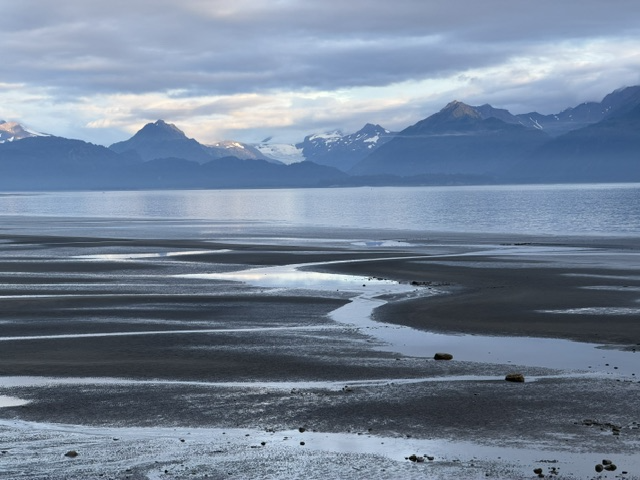
Homer, Alaska is situated at the end of the Kenai Peninsula and surrounded by Kachemak Bay. At the southern tip lies The Spit, a long narrow stretch of a “gravel bar built by coastal currents, waves, erosion, and sediment deposit.” This is where Jo and Ron kept their boat, in Homer Harbor.
The boys were going fishing.
The tidal movements are extreme around Homer and The Spit as witnessed by the long, slope down the gangway to the docks where the boat was. Not fun if you have to unload your boat on a low tide. When the boys returned, the tide was in their favor. Fortunately, because they were unloading 140 lbs. of fish; eight halibut and two king salmon! Wowza! We were in for another feast.
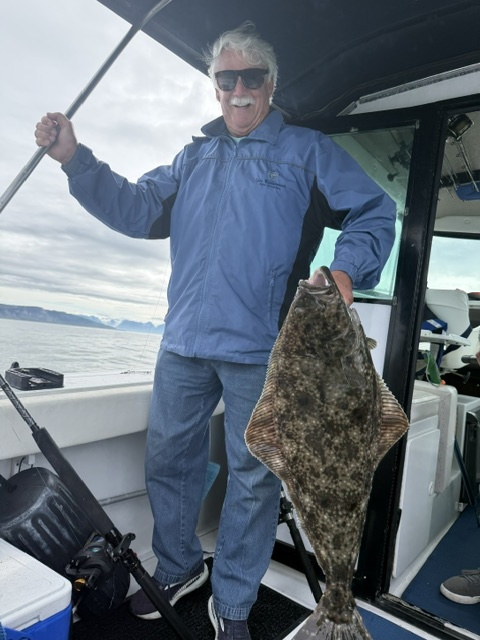
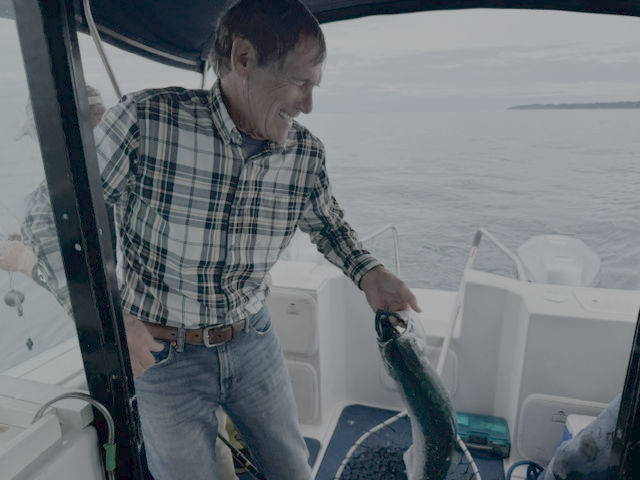
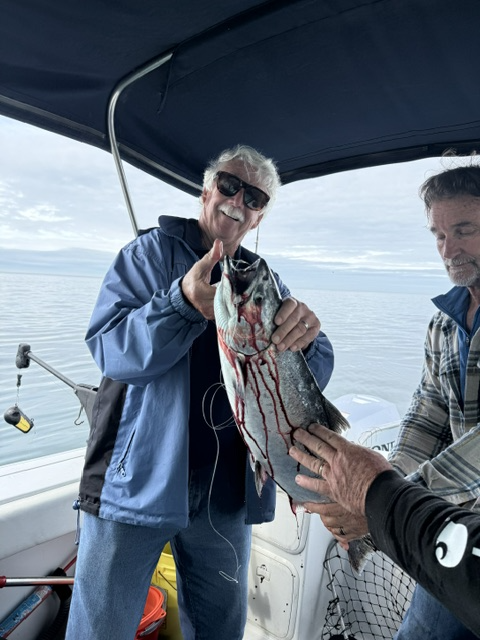
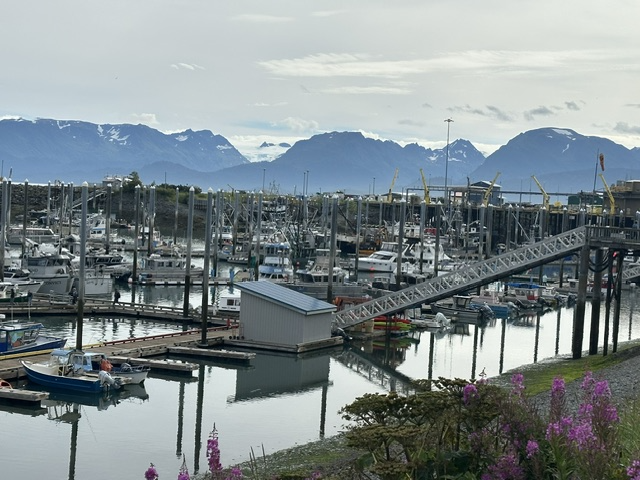
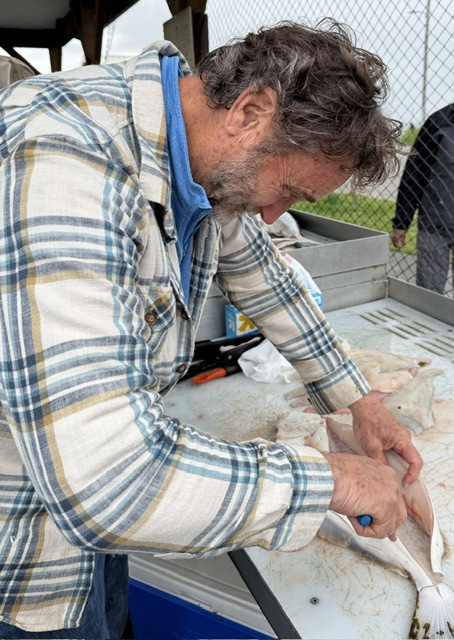
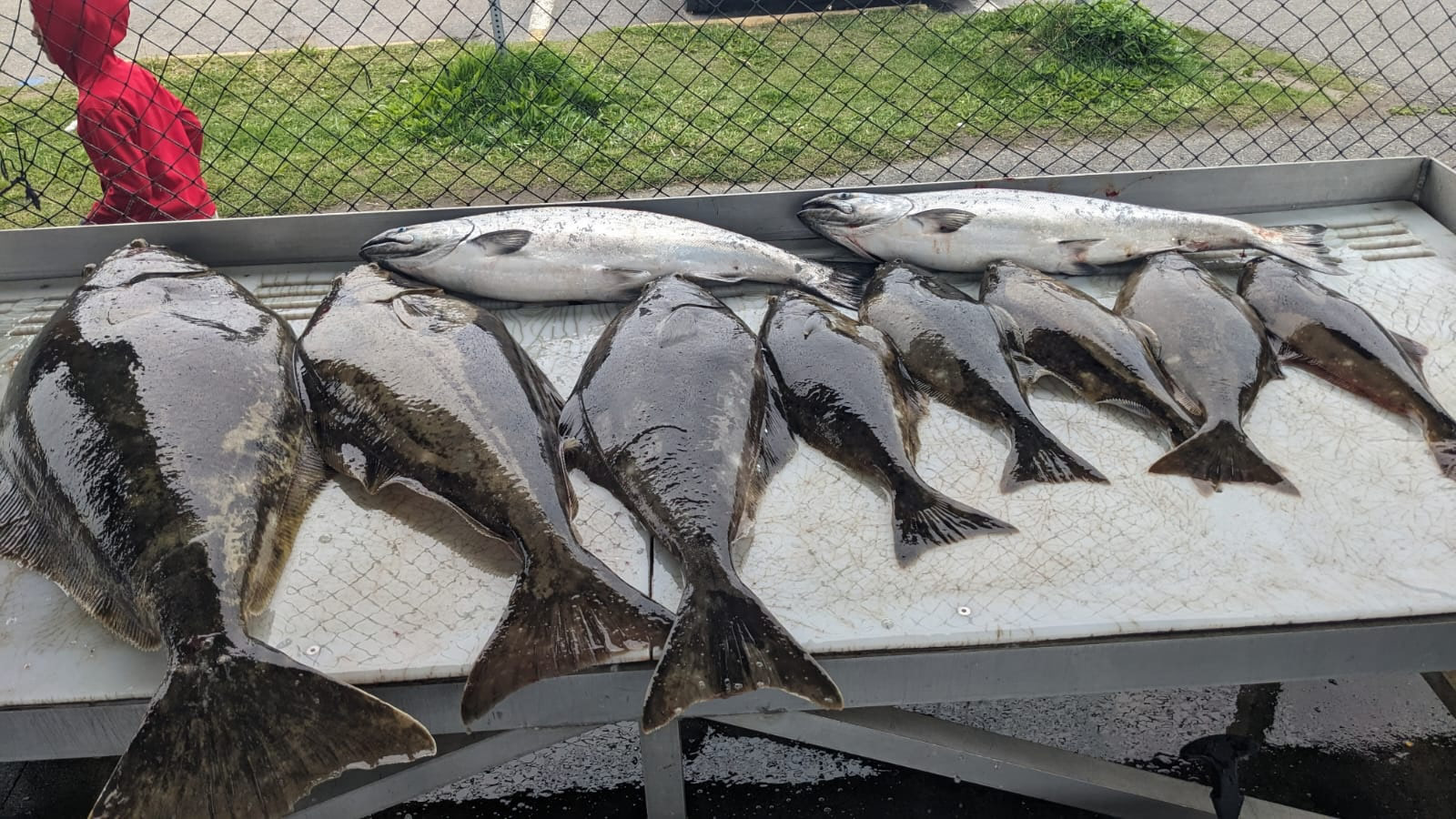
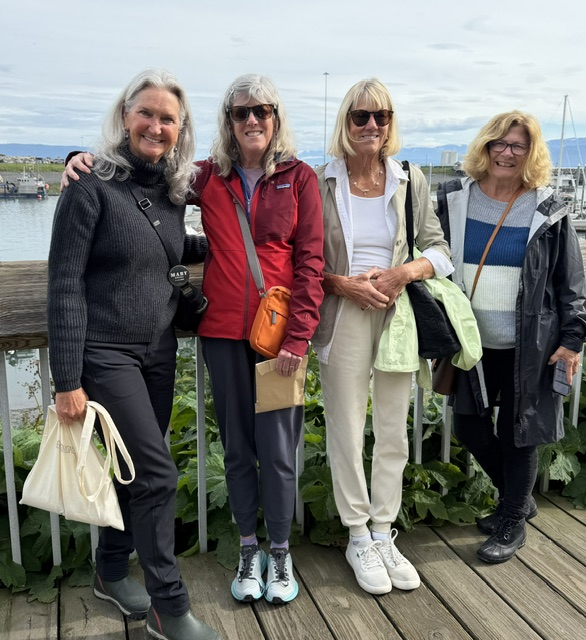
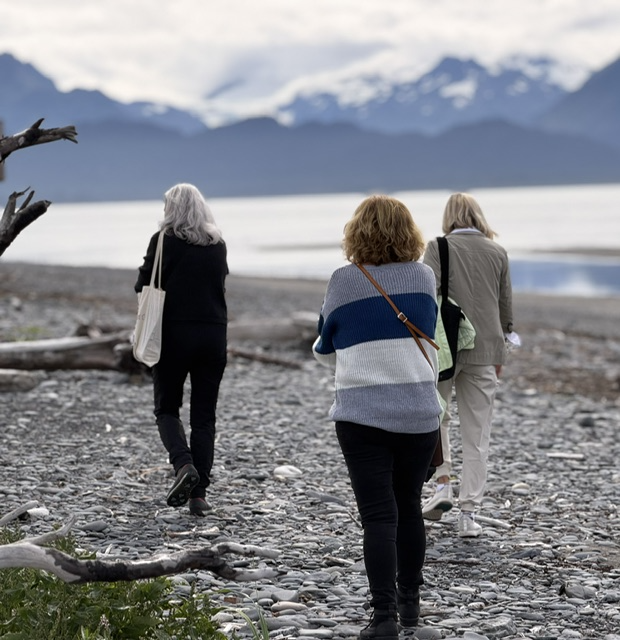
While the boys were out fishing, the girls explored the shops on The Spit, walked the beach, and found a winery in town. Later, we met at Ron & Jo’s for that promised feast; halibut enchiladas, Ron’s specialty. Who knew halibut enchiladas could be so good? Of course, I had to have the recipe.
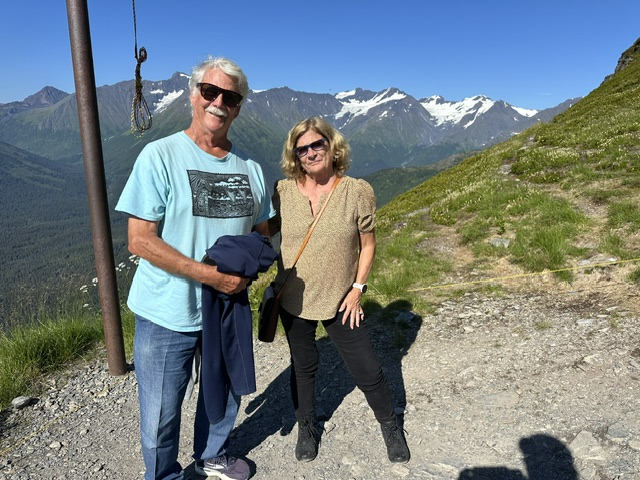
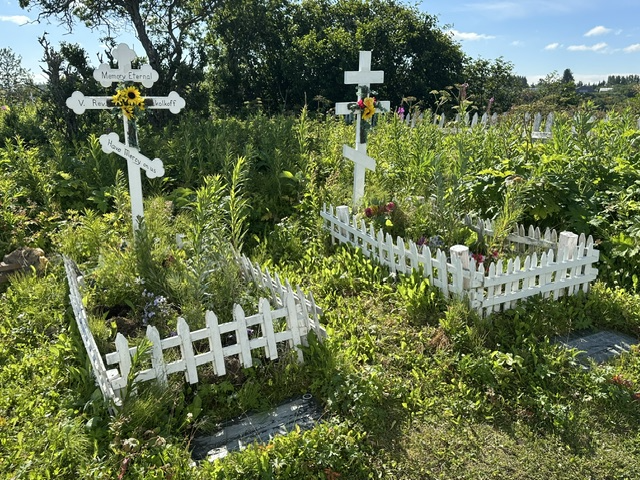
After two nights in Homer, it was time to head back to Palmer. On the way back, we stopped at Summit Lake for ice cream, visited an old Russian Orthodox church and graveyard, and rode the tram up Alyeska Mountain at the lodge in Girdwood. For dinner, we stopped in Anchorage where we met up with yet another Mexico sailor, Joe from sv/Sherpa.
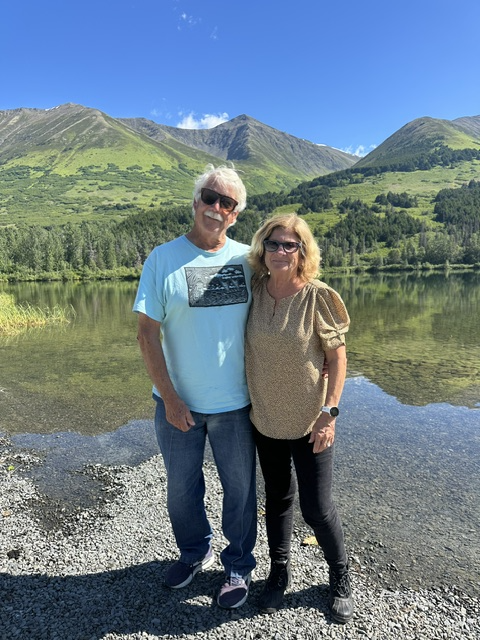
I started out this blog saying how difficult it would be to top our first day in Alaska, flying over the mountaintops and hiking into Lake George. And yes, that was a once in a lifetime experience. Dramatic and thrilling. But the state of Alaska, of which we saw only a little, is dramatic and thrilling from the ground too. The sheer magnitude of the mountainous wilderness that lies within walking distance of towns. The rugged, raw beauty of nature at every turn. The extreme weather conditions (not to mention the long days of sunlight or darkness) creates a landscape that is both breathtaking and harsh. I am in awe of this wonderland and the people who call it home.
Leave a Reply